
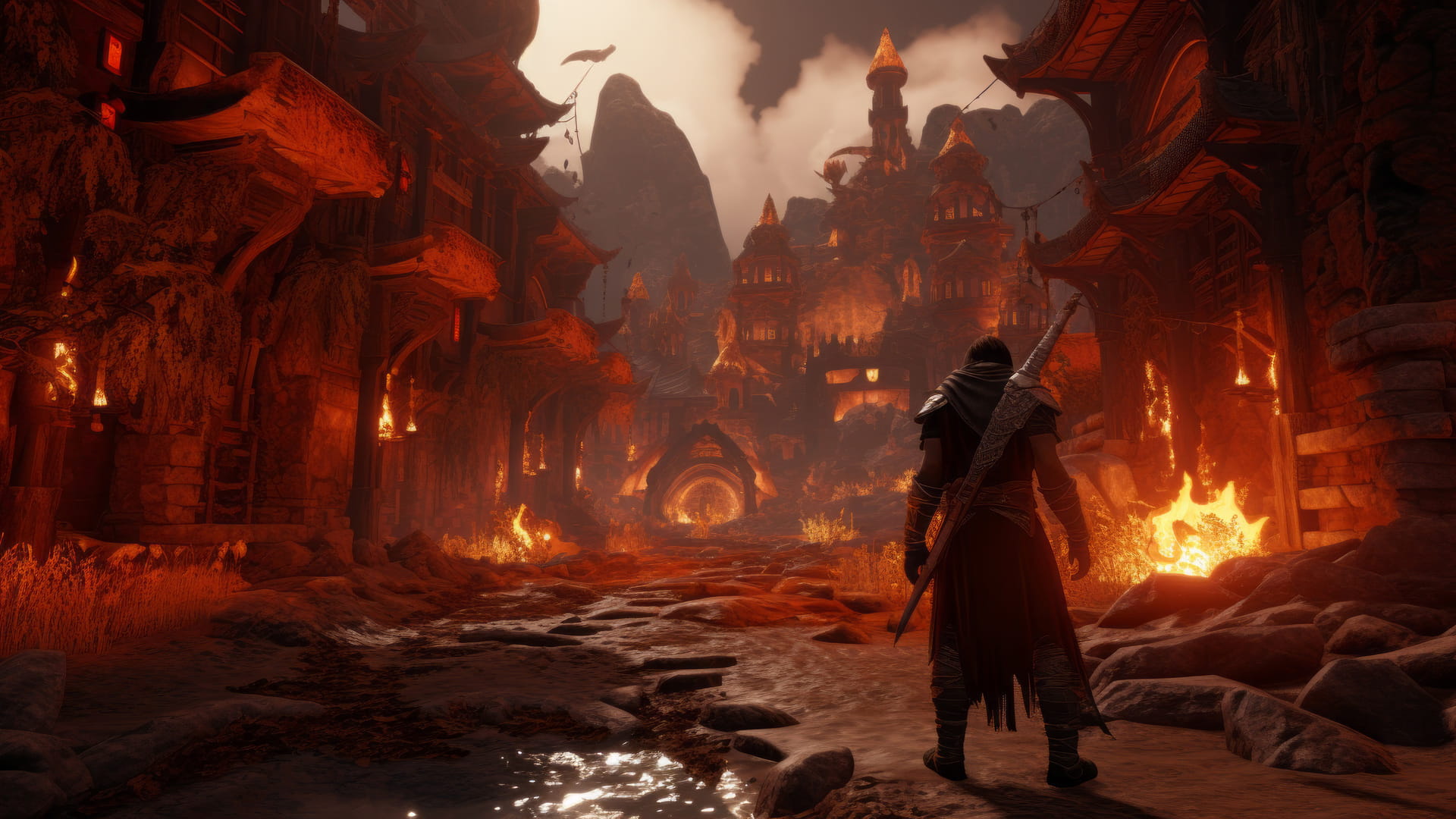
How Are Games Like Diablo IV Designed? A Breakdown of What Makes Them Work
11 May, 2026
Discover how games like Diablo IV are designed through level design, progression systems, game art, UI, and player engagement mechanics.
The gaming industry has become one of the most influential parts of entertainment, with millions of players spending hours inside digital worlds every day.
According to Statista, revenue in the games market is projected to reach US$577.91 billion in 2026, with an expected annual growth rate (CAGR 2026–2030) of 6.58%.
What stands out is how player expectations have evolved alongside this growth. People look for experiences that feel engaging over time, where progression has meaning and gameplay keeps pulling them back in.
You can see this clearly in modern action RPGs.
A strong example is Diablo IV.
At first glance, the loop feels simple. You fight enemies, collect loot, and improve your character. Spend more time with it, and the structure becomes more visible.
The pacing feels consistent. Rewards arrive at the right moments. Progression feels steady and satisfying.
That kind of experience comes from careful design choices and working together behind the scenes.
What Is “The Art of Game Design” in Modern Games?
Game design focuses on how a player navigates a journey from one instance to another. Each choice determines what the player notices, how long he/she remains engaged, and whether he/she feels motivated to continue.
To achieve this, most games are based on three factors: attention, pacing, and reward.
Attention ensures the player has a clear direction at all times. This may be through level layout, enemy positioning, or visual representations, which inherently lead to movement.
Pacing is an aspect that regulates the course of the experience. Action, tension, and downtime are organized so that the game appears balanced and consistent.
This is where the art of game design is evident. It is about integrating a system with another in a way that makes sense to the player.
How Does Level Design Guide Player Movement in Diablo IV?
Level design influences player movement throughout a game without making it feel forced. The design, the enemy’s positioning, and the environment combine to create a natural flow, so players keep moving without constant direction.
-
Organized Directions, and Not a Haphazard Search
Dungeons are constructed with well-defined trails that seem natural to walk along. Despite the presence of branches, they tend to loop back or lead towards goals; as a result, players are hardly ever lost.
-
Direction is Driven by Enemy Placement
Enemies are not at random. They are placed so that when the players move, they get a sense of flow, with movement and fighting intertwined.
-
Graphical Effects Help Gamers Stay on Track
The details are subtle and directed, including lighting, environmental design, and layout. Players move towards what is distinguished without requiring directions.
-
Freedom vs Control
The game provides a sense of exploration, yet the structure maintains a constant pace. Players are made to feel in control as the design silently guides them forward.
Why Is Video Game Art and Design Important in Diablo IV?
Game graphic design focuses on how information is presented to players during gameplay. It ensures players can make sense of what is happening, react quickly, and avoid confusion.
-
Clear Combat Information
Displaying health, mana, and skill cooldowns in an easy-to-read format during fast-paced combat. Players can make decisions without losing focus.
-
Icons of Intuitive Skill and Ability.
Skills are visualized using vivid visual representations. Players can identify actions at a glance rather than through text or menus.
-
Organized Inventory and Menus
Inventory management systems are designed to make managing items easy. Players can compare gears, equip, and move forward without unnecessary friction.
-
On-screen Feedback on Player Action.
Immediate feedback is given by damage numbers, effects, and animations. They play and understand the effects of their actions.
Before any system comes to life, it begins with video game art and design, where ideas are shaped into the world players eventually experience.
How Does Game Graphic Design Affect Gameplay in Diablo IV?
Game graphic design focuses on how information is presented to the player during gameplay. It ensures that players can understand what is happening and react quickly without confusion.
-
Clear Combat Information
Health, mana, and skill cooldowns are displayed in a way that is easy to read during fast-paced combat. Players can make decisions without breaking focus.
-
Intuitive Skill and Ability Icons
Abilities are represented through clear visual icons. Players can recognize actions quickly instead of relying on text or menus.
-
Organized Inventory and Menus
Inventory systems are structured to make item management simple. Players can compare gear, equip items, and move forward without unnecessary friction.
-
Visual Feedback for Player Actions
Damage numbers, effects, and animations provide immediate feedback. Players understand the impact of their actions as they play.
As games become more complex, game graphic design plays a key role in maintaining clarity and ensuring a smooth experience.
How Do Loot and Progression Systems Keep Players Engaged in Diablo IV?
Progression systems are what keep players invested over long sessions. They create a steady sense of growth, where each action leads to visible improvement. In Diablo IV, this is handled through a combination of loot, upgrades, and balanced rewards that make the experience feel consistent and engaging.
| Element | How It Works in Diablo IV | Why It Keeps Players Engaged |
| Loot System | Items drop frequently with different rarity levels | Creates anticipation and excitement for better gear |
| Skill Progression | Players unlock and upgrade abilities over time | Adds variety and a sense of control over playstyle |
| Character Growth | Stats and equipment improve gradually | Makes progress feel visible and rewarding |
| Reward Timing | Rewards are spaced based on effort | Keeps the experience satisfying without feeling repetitive |
A well-structured progression system builds momentum. Players continue because the game consistently rewards their time and effort.
Why Do Games such as Diablo IV Evolve over Development?
No game is released to players in its final version immediately. Hiding in the background, systems are regularly tested, tuned, and refined to enhance the experience. Know why:
-
The need to use iteration
Preliminary versions of a game can often lack balance, pacing, or difficulty. These problems are identified through testing and player feedback.
-
Balancing Gameplay Systems
The combat, loot, and progression systems are modified to ensure consistency. Even minor changes can have a profound effect on the game’s experience.
-
Improving Player Experience
The feedback helps developers know what is working and what is not. Friction points are addressed through updates, and enhanced flow is achieved.
-
Constant Updates Since Release
Games change even after launch. New content, patches, and adjustments ensure that the experience is balanced and refreshed.
Conclusion
Games like Diablo IV feel engaging because every element is carefully structured to work together, from core design systems to visual direction and player interaction.
When you start looking at games this way, you begin to notice the decisions behind every moment, not just the outcome.
If you’re interested in learning how these experiences are built, exploring areas like the art of game design, video game art and design, and game graphic design can give you a strong foundation.
Programs like the Diploma in 3D Modeling and Game Art at MAGES Institute of Excellence are designed to help you understand these principles and apply them in real projects, so you can move from playing games to creating them.
FAQs
1) What is the core gameplay loop in games like Diablo IV?
The core loop usually involves combat, loot collection, and character upgrades. This cycle repeats throughout the game, keeping players engaged through steady progression.
2) Why does Diablo IV feel engaging for long play sessions?
The game balances combat, rewards, and progression consistently. Players continue because they experience regular improvements and meaningful upgrades.
3) What is meant by “the art of game design”?
It refers to how different systems in a game are structured and connected. This includes gameplay mechanics, pacing, rewards, and player interaction working together smoothly.
4) How does level design influence player movement?
Level design guides players using layout, enemy placement, and visual cues. It creates a natural path without making the direction feel forced.
5) Why is video game art and design important in games?
It defines a game’s visual identity. It helps players understand the environment, recognize elements quickly, and stay immersed in the experience.
6) What role does game graphic design play during gameplay?
Game graphic design focuses on how information is presented. Clear interfaces, icons, and feedback help players make decisions quickly during gameplay.
7) How do loot and progression systems keep players interested?
They create a sense of growth over time. Regular rewards and upgrades make players feel their efforts are meaningful, encouraging them to continue playing.
8) Can beginners learn game design and development?
Yes, beginners can start by understanding basic design principles, visual design, and player interaction. Structured learning can help build these skills step by step.
Related Posts
SPEAK TO AN ADVISOR
Need guidance or course recommendations? Let us help!
